
Landscape as infrastructure
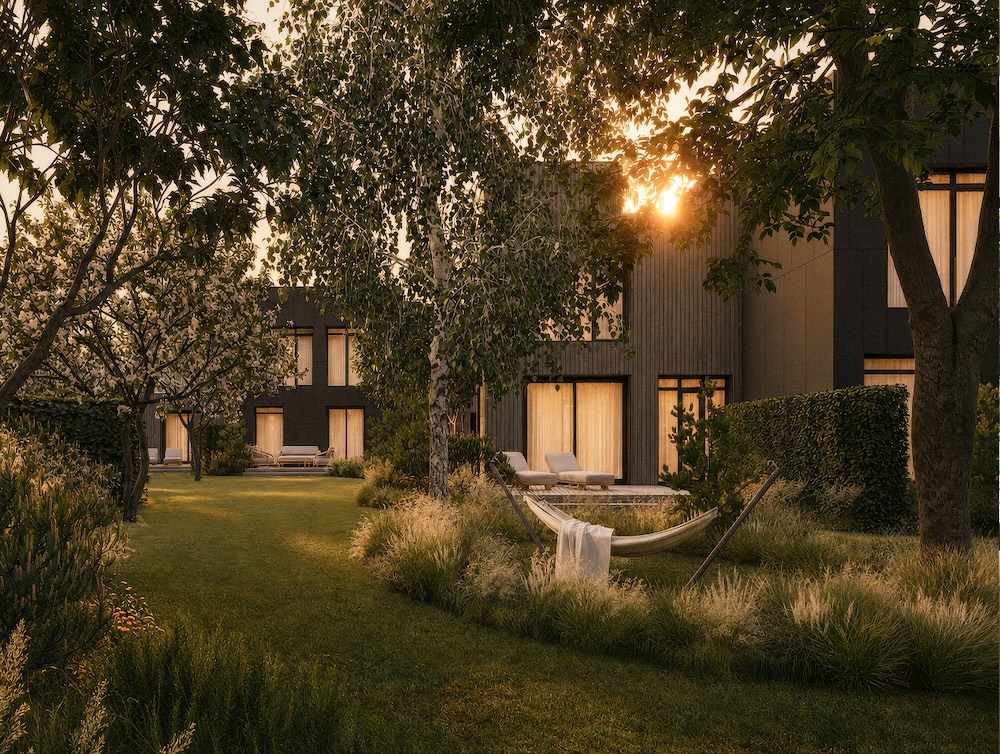
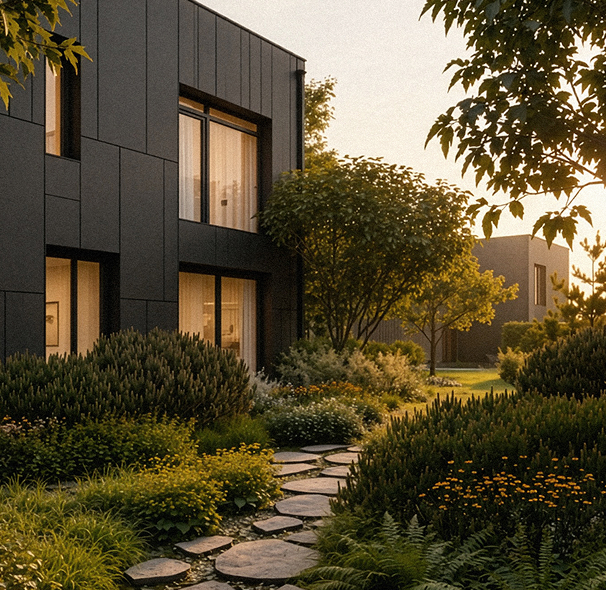
Privacy through landscape
Privacy is achieved without fences or walls. Changes in level, layered planting and existing woodland shape views between residences. Boundaries remain clear without becoming visible. The result is a sense of seclusion that emerges from the site itself.

A childhood among the trees
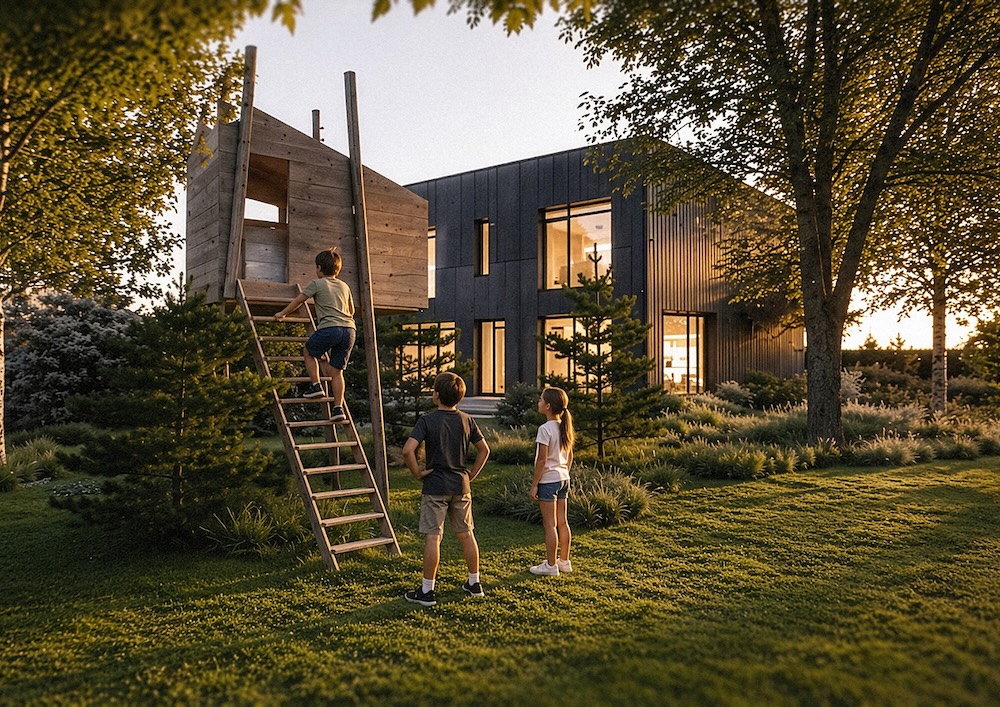
A family’s needs do not end at the front door, and the landscape at Ligno Living was not designed for adults alone.
Among the retained trees, a small wooden house sits raised into the canopy, reached by climbing rather than by stairs. Nearby, the ground itself becomes something to move through: a hollowed log to crawl inside, low branches to balance along, boulders set at a child’s scale.
It is the existing woodland, shaped slightly, so that climbing, balancing and crawling become part of how the site is used, not an activity added on top of it.
The result is a garden that asks to be explored rather than simply looked at, for the residents who notice tree bark and fallen branches before they notice anything else.
Landscape follows the same logic of wood-built houses
Conifer connects the project at multiple scales. It appears in the engineered timber structure, the interior surfaces and the landscape strategy.
Material and landscape follow the same logic. One informs the other. A treehouse positioned within the woodland extends this relationship to the youngest residents.
Landscape Architecture by Linda Zaļā


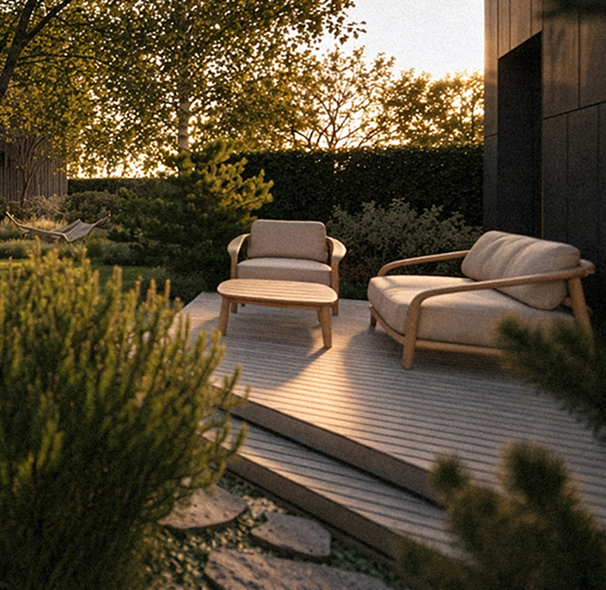
Biodiversity-driven planting, pollinator-friendly perennials, flowering shrubs and edible fruit species form a seasonally changing landscape that supports birds and insects, and strengthens ecological resilience within the city. Natural play elements, low tree branches, logs, boulders and meadow-like planting, encourage children to experience the landscape through movement, curiosity and direct contact with nature.
The intention was to create an outdoor atmosphere that feels both intimate and alive: a small-scale ecosystem and a calm garden world, surprisingly close to the centre of Riga.”
– Linda Zaļā, Principal Landscape Architect, Zala Landscape Architects
Linda Zaļā is Principal Landscape Architect at Zala Landscape Architects. For more than twenty years, she has worked across private gardens, residential environments and large-scale public landscapes. Her approach combines long-term thinking with careful attention to detail. Each project is shaped by its context and designed to support everyday use over time.